2026-09-24 · 4 min
A body in the room
Some callings are proprioceptive. The knowledge lives in timing, grip, and fatigue.
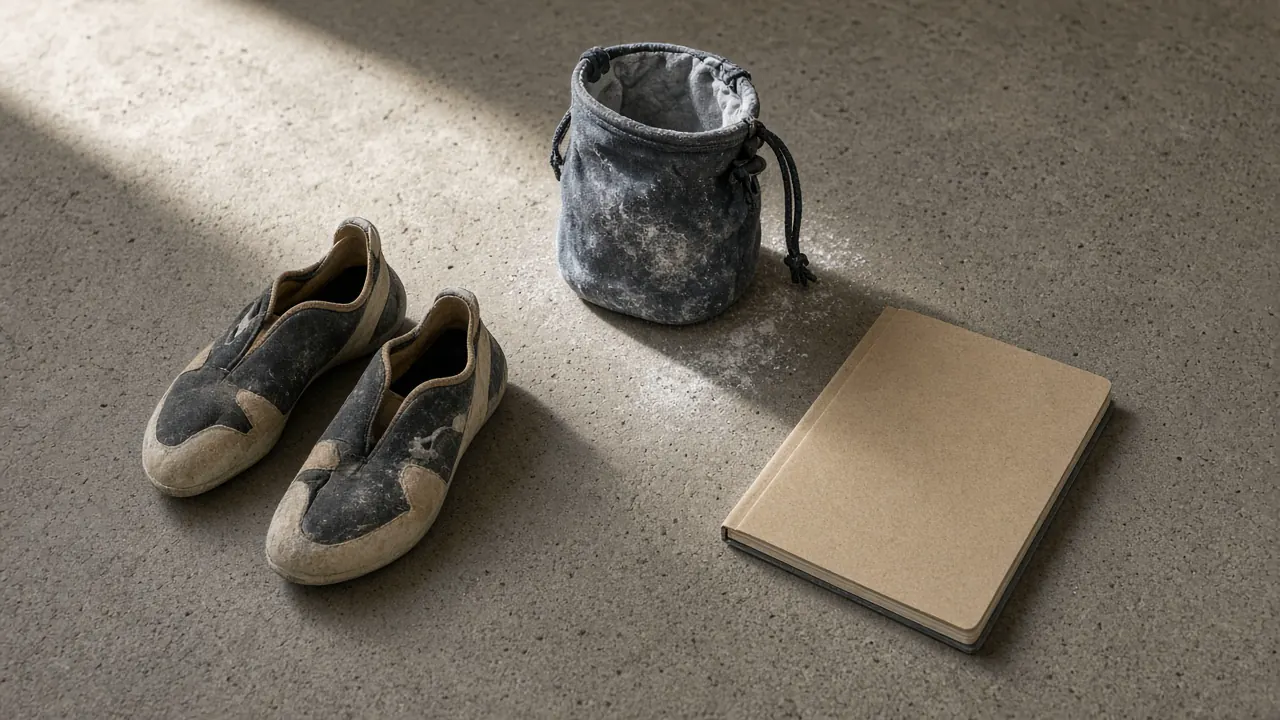
Matthew Crawford left a think-tank job and went back to fixing motorcycles. Shop Class as Soulcraft is his argument that some knowledge only exists in the encounter with a resistant thing: an engine, a board, a patient who needs to stand. He is opinionated about the economy, and you can argue with the politics. The local observation is harder to dodge. There are trades, sports, and clinical practices where the thinking happens in the hands, and a person who needs that kind of thinking will be lonely in a job that is only a screen.
Twyla Tharp’s The Creative Habit is the dancer’s version, less angry and just as strict. She writes about ritual, about starting before you feel like it, about the body as the place work begins. Athletes and potters and nurses on their feet recognize the page. So do people who run in order to tolerate a desk. The run is part of the cognitive equipment.
Career conversations often treat the body as a health topic that arrives after the vocation has been chosen. That order is backwards for a large minority. The vocation includes a way of being tired. Climbing, rowing, nursing, cooking on a line, restoration carpentry, dance teaching: the day has a texture in the muscles. If your Interest Map keeps producing a physical practice next to a subject, believe the adjacency. Sports psychology, outdoor education, occupational therapy, field science, and studio teaching are borders where the body is hired along with the mind.
There is a snobbery that calls this “using your hands” as if the hands were a consolation prize. Crawford is good on that snobbery. The diagnostic skill of a mechanic who can hear a fault is a cognitive achievement. So is a teacher who can see, from a student’s stance, that the clay is about to collapse. Those perceptions do not survive a job description written only in software nouns.
Put the sport or the craft on the chart in plain words. Then ask which paid rooms still require it. If the honest answer is “few, and they pay badly,” you still have a design problem you can see: keep the practice as the thing that makes the other work possible, and choose the paid work that does not confiscate the knees, the evenings, or the one dry day. A calling can be the structure around a practice, the way a week is built so the body still gets its hour.
Sources
- Matthew B. Crawford, Shop Class as Soulcraft: An Inquiry into the Value of Work. Penguin Press, 2009.
- Twyla Tharp, The Creative Habit: Learn It and Use It for Life. Simon & Schuster, 2003.